

Showing posts with label Tips. Show all posts
Showing posts with label Tips. Show all posts
4/20/2020
Must read personal finance books!

3/13/2020
Net Worth Update & Comments on Market

Here is my net worth update for both February and March 2020. My investment took a big hit due to the recent market downturn, but I was able to see all my Amazon shares at near the peak back in February. I have since put all those cash back into the market, picking up some stable blue-chip stock on the way down.
There is a lot of fear and panic going on right now, my advice for those that are in the market is to stay put and look for opportunities to buy. There is currently a lot of good companies that are trading at a deep discount right now, some of these company have a good track record of safe and reliable dividends. As the saying goes, "Be greedy when others a fearful."
9/18/2019
How setup a low cost RESP?

Hello, today I'll be writing about RESP and how you can open and manage your own RESP to avoid paying a hefty management fee. First off, for those that don't know what RESP is, it stands for Register Education Saving Plans. Like the name suggests, it helps with parents saving for their kid's education fund. There are two big benefits to this plan, the first is that the gains are not taxed if the money is used for education. The second benefit is the Canada Education Savings Grant (CESG), which is the government's contribution to the RESP. The government will contribute a maximum of $600 into the RESP depending on your income and contribution.
For more information with regards to CESG, you can find it on the CRA website. Here is the link: https://www.canada.ca/en/revenue-agency/services/tax/individuals/topics/registered-education-savings-plans-resps/canada-education-savings-programs-cesp/canada-education-savings-grant-cesg.html
There is also a lifetime contribution limits of $50,000, again I'll suggest you check out the CRA website for all the information.
Opening an RESP
Well, first of all, you must be a parent to open an RESP. Sorry, if you are just planning to become a parent, the government won't let you plan that far ahead. Once your child is born then you can go to any organization that can sell investment or securities and open an RESP account. I myself opened an RESP Direct Investing account through my bank, similar to what I did for my TFSA. A lot of people think that just because it's an RESP you have to go through some education mutual fund company. However, you can buy individual stocks, ETF or index fund within an RESP account. Banks will never tell you that option because they'll want to sell you one of their mutual fund for your RESP, therefore you'll have to specifically ask for a direct investment account.
Why do you want to do this? Because this way you can invest in a low-cost index fund for your RESP instead of a high-cost mutual fund. One of the RESP funds I saw had an annual management fee of 3% compared that to an index fund where the management fee is around 0.05-0.5%.
Managing your RESP
There isn't much management to be done, once you have an account open, set up for an automatic monthly contribution of $210, this will max out the government's contribution. Then you can go in every month to buy a low-cost index fund, mine is currently invested with the TD e-series Index funds. Then in a few months time, you'll see the government's contribution automatically being put into your account. I usually spend 5 minutes a month managing the RESP, so it is completely doable for any parents.
Watch it Grow
Then now you can sit back and watch your child and the RESP grow for the next 18 years.
9/16/2019
Tips to reduce monthly expenses!

Here are some cost-saving tips that I have learned over the years. My post about my monthly budget also talked about a few cost-saving tips that my wife and I use.
- Utilities Cost Doesn't matter if you rent or own a house you'll still need to pay for utilities. Depending on where you are living the price of utilities vary drastically (i.e Ontario vs Alberta). The thing about utilities is that the less you use the less you paid. A very obvious statement that a lot of people fail to use to their advantage. Here are a few things that usually cost you the most but are easy to cut back on:
- Heating - Setting your house to a high temperature so that you can wear a T-Shirt around the house in the winter is a very costly habit. A few degrees less can save you big time over the span of winter.
- Shower - Taking a long shower does two things, uses water and uses electricity or gas to heat up the water. Just remember that it is not just the water you are using but also the boiler for the hot water.
- Dishwasher - Dishwasher is the same as shower, it uses hot water for washing then electricity for drying the dishes. Set your dishwasher for air dry if possible, it'll take a little longer to dry but will use less electricity.
- Auto Insurance A very simple cost-saving measure is to increase your deductible on your insurance. This means that if you ever decide to claim insurance you'll have to pay more out of pocket for your repairs. If you think about it, most people don't claim insurance for the minor incident and when you require major repairs the cost will be much higher than your deductible. Also, remember your insurance policy gets taxed so having a more expensive plan means paying more tax. Increase your deductible, pay less tax and save the difference.
- Internet/Cables You don't need the fastest internet available unless you have a lot of people living with you. The cheapest plan is often enough for all your internet needs such as Netflix or gaming. If you need more then upgrade to a better plan after. As for TV, I realize that a lot of on-demand option such as Netflix or Sports TV subscription will still end up being much cheaper than a cable package.
- Repair > Replace When something breaks in your house you can either repair it or replace it. Sadly a lot of people opt for the latter and end up spending way more than they need to. I remember when my refrigerator broke my first instinct was to get a new one to replace it. After some research on Google, I was able to diagnosis the problem and end up buying a replacement part for $70. If you try to replace things when they break then you will spending a lot of money.
9/09/2019
TFSA vs RRSP

Hello everyone, today I am going to write about Tax Free Savings Account (TFSA) vs Registered Retirement Savings Plan. A lot of people I've spoken to knows about the two products but don't truly understand the difference between them. To start off, the ultimate aim of these products is to promote you to save money by giving you tax incentive.
6/19/2019
Beginner's Guide to Mortgage

Hi, today I am going to talk about mortgage and things to consider when getting a new mortgage. Since my near term goal is to pay off my mortgage within three years, I figure it only makes sense to do a post about mortgage. OK, so what is a mortgage? It's a fancy term for a loan to allow you to buy a house, meaning you are borrowing money. Mortgage is a big business and banks love them. Let's just think about this, when you get a mortgage, you pretty much are sharing ownership of the house with the bank since they, in theory, are buying the house for you. In return you pay interest and you assume almost all the risk for that property. There is a reason why you must have home insurance on your home or else the bank will not give you the loan. If you stop paying your monthly payments then the bank will come and evict you from the house, this is known as foreclosure. Intro asides, let us get into the process of getting a mortgage.
5/27/2019
Asset Management: Putting your money to work!

Assets management is an important skill you must learn during your journey. You must develop the mindset of money as your workers, and you are their manager. Just like at any job, the manager gives tasks for workers to perform. Therefore you must do the same thing with your money.
5/20/2019
Things to do during your journey to financial independence

Starting your journey to financial independence can be very exciting at first, tracking your monthly cash flow, seeing your net worth change, learning about investing, and even planning what to do with all your wealth once you've accumulated them. After the initial excitement, you'll probably start wondering what else is there to do? Today I am going to share things that I've been doing since I started this journey to keep the excitement alive.
1/21/2019
7 Steps to Getting Rich!
I recently did a 13-hour road trip driving from Toronto to Eastern Canada, and to past the time I decided to listen to 13 hour worth of Dave Ramsey podcast. I learned about Dave Ramsey just from reading other financial blogs and forums. Dave Ramsey is a financial coach who tries to teach people how to get out of debt and start building wealth. He uses a very simple 7 steps system that every one of his audience can follow. Anyway here are his 7 baby step in the picture below.
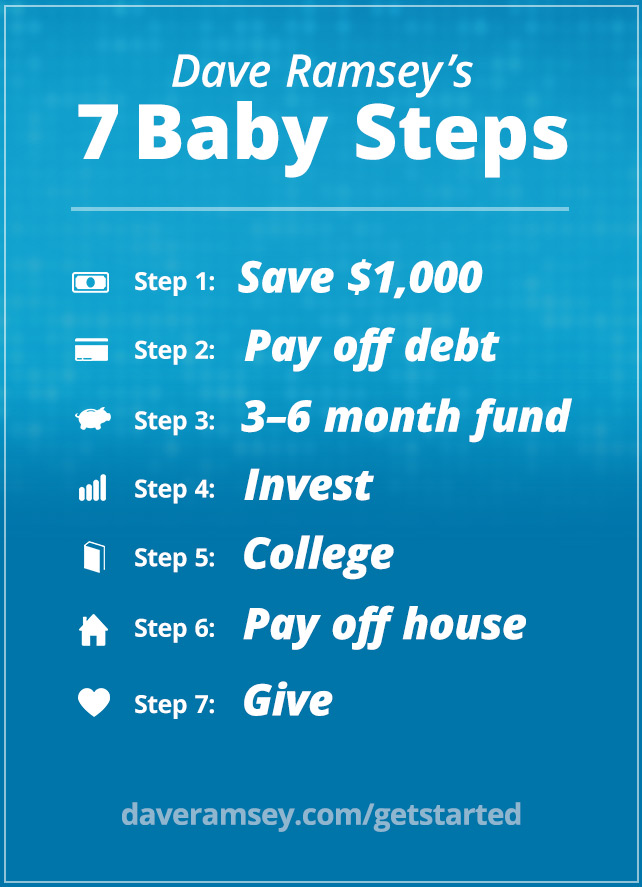
Before starting any of these steps, it is important to ensure that you have a budget and that your monthly spending doesn't exceed your income. If you can't have a positive monthly cash flow then you'll need to either generate more cash or spend less. Spending less might mean getting a cheaper house or a cheaper car so that your monthly payment is much less.
Step 1
Pretty straight forward, it literally just means putting aside $1,000 in a normal savings account. That is it, don't need to invest it or anything.
Step 2
This step is to pay off all your debt minus excluding your mortgage using a technique call debt snowball. A very common method to build momentum while paying off debt, you can easily google "debt snowball" and learn about it.
Step 3
Once all your debt has been paid off, then you put more money into your savings account, this pile of money becomes your emergency fund. Dave's advice is to keep this fund liquid, the point is not to invest and grow this fund.
Step 4-6
Then a lot of time Dave will suggest doing these three steps simultaneously, his rule of thumb was to invest 15% pre-tax income for retirement. Then with money left over you can choose however you want to split it between saving for a short-term goal (vacation, new car, down-payment, etc.), save for kids college fund, and put extra-payment towards your house.
Step 7
Once you have your house pay off then he tells people to be generous and give to a cause that matters to them.
I love the 7 baby step because it's so simple and helps you prioritize what you need to do depending on which step you are currently at. I also like it because it separates a mortgage debt with other debt, in a way it tells people that it is okay to have a mortgage as long as that's your only debt. It definitely took the pressure off me hearing about it, before I put a lot of pressure on myself to be debt free that I was prioritizing mortgage over investment. Now I feel that I can split my money evenly between mortgage, investment, and other savings. A key thing I want to point out is that if you can't invest around 15% of your pre-tax income towards retirement then you'll need to revisit your budget and see where you can cut spending.
1/05/2018
DRIP - Getting wealthy at an exponential rate

Intro
Today I am going to talk about DRIP and how it can help you grow your wealth at an exponential rate. First of all, DRIP has nothing to do with water nor is it a metaphor for investing. DRIP stands for Dividend Reinvestment Plan and that is exactly what it is. DRIP is way for you to reinvest your dividends, usually back into the same equity that distributed the dividends.
Dividends for those that don't know are cash that a company pays its stockholder base on the number of shares you hold. If you read my passive income post you'll see that company like Enbridge (TSX: ENB) pays $0.671 per share on a quarterly basis. I hold 189 shares of Enbridge stocks and therefore I get pay around $127 on a quarterly basis.
How DRIP work is that instead of paying you the dividend ($127 from Enbridge) it will reinvest it for you by buying more shares. In my case, instead of getting $127 I get 2 whole share of Enbridge since they are trading around $50 per share right now and what ever cash remaining.
 |
| A screenshot from my investment account showing how DRIP works. Enbridge recently increased it's dividend payout, therefore this picture don't match the numbers above. |
To set it up, you simply contact your investment broker and tell them that you want to setup a DRIP and they'll get you started. Just remember that for most cases, the dividend payout must be enough to purchase one whole share of the stock.
Benefits
There are a few benefits for setting up a DRIP. The first benefits is you don't have to pay any commission for the shares you purchase.
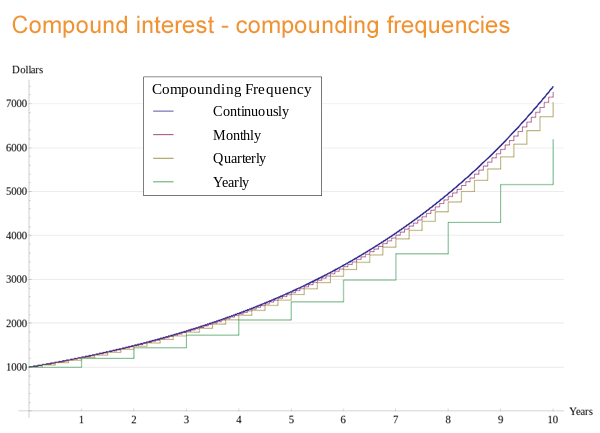
The second benefits is DRIP allows you to grow your investment at exponential rate by compounding. Then depending on the frequency of dividends payout you'll be compounding either monthly, quarterly or annually. Most people heard of compound interest and also learned it in school. This is the same thing, instead you are compounding your dividends. Below is a graph that shows the benefits of compounding and the different frequency of compounding.
Here is a quick calculator I found that helps you calculate the return on compound dividends. Calculator. Start investing and start DRIPing, let the power of compound work for you.
12/08/2017
Books for new investor #2
A few months ago I wrote a post about books that I found beneficial for new and young investor like myself. Here is the link to that post. In it, I talked about three books that I have read which gave me some good insight on how to start building wealth. There is also a compiled list on the left-hand side under popular post.
Today I am going to talk about two new books that I have recently finished in which I found beneficial to my learning.

Another interesting concept he discussed in his book was something called "income statement affluent" which is the opposite of another term he used, the "balance sheet affluent". The basic idea is that the income statement affluent are people that have a high income but save very little where the balance sheet affluent are very good savers. His argument was that income has very little influence if someone becomes wealthy or not. For someone to become wealthy you need to be good an offense(earnings) and defense(savings). Which means even if you earn a lot but you spend just as much then you'll never become truly wealthy because one day you'll stop earning.
Today I am going to talk about two new books that I have recently finished in which I found beneficial to my learning.

Another interesting concept he discussed in his book was something called "income statement affluent" which is the opposite of another term he used, the "balance sheet affluent". The basic idea is that the income statement affluent are people that have a high income but save very little where the balance sheet affluent are very good savers. His argument was that income has very little influence if someone becomes wealthy or not. For someone to become wealthy you need to be good an offense(earnings) and defense(savings). Which means even if you earn a lot but you spend just as much then you'll never become truly wealthy because one day you'll stop earning.
10/07/2017
Warren Buffett: "The Bet"

Soruce: https://www.cheatsheet.com
From a lot of book I have read about investing, this seems to be the common message. They all say paying big bucks to have "smart" people mange your money will never give you as good of a return if you just invested into the market. Even if a fund manager can out perform the market, the commission he pays to broker, the tax he pay for gains, and on top of the cost for his time will diminish his strong return. This is one thing I want to emphasis when people are looking to invested into actively managed mutual funds, most time they don't show the return after accounting for all their expenses. Let say a fund advertise a 10% return, it might only actually be a 7% return when you calculate all their fees.
Anyway, my thoughts are as follow, either invest in a passive index fund that tracks a market index or manage your own portfolio. In one my earlier post I gave some advice on how to get started. Invest wisely, but remember, wealth building is a slow process. Slowly but surely you'll get wealthy.
9/20/2017
Transferring into TD Direct Investing and reimbursing account transfer fee
Disclaimer: I don’t work for any financial institute. I am just sharing my experience.
This is post to walk through my experience of transferring an TFSA investment account with Questrade and combining it with a TD Direct Investing (TDDI) TFSA account. If you are not already a TD client, the process will be very similar except you’ll have to sign a few more paperwork to open a TD Direct Investing account.
When the Canadian government first introduced the TFSA, I opened a TFSA with TDDI but the fee back then was a hefty ~$29 per trade. If you do the math, the fee added up very quickly. As online brokerage became more and more popular over the years, I decided to give them a try and opened an account with Questrade for a low ~$5 per trade (back in around 2012). Their fees were alright for while until they started increasing them to effectively ~$10 per trade and introduced an inactivity fee of ~$25 per quarter if your balance is below $5K and don’t perform a trade. As the same time, TD caught up with the pack and decreased their fee to ~$10 per trade but also started charging an $25 quarterly fee if your balance is below $15K.
$5K balance was not a big amount to maintenance but ever since the drop in oil price (my holding in Questrade was oil heavy), my holding balance went below that threshold. As a result, I was left with two options: 1) increase my balance with Questrade so I don’t have to pay the quarterly fee or 2) transfer out. I don’t want to simplifying close the account because that means selling all the stocks, withdrawing the amount, and affect my TFSA contribution.
Both Questrade and TDDI have a comparable online trading interface but since I do majority of my banking with TD and they have a lot of retail location I can go to, I decided to transfer my Questrade account to TDDI and combine everything together.
Step 1: Call or go online and book an appointment with TD
I decided to call TDDI because I want to see if TD can cover the $150+tax account transfer fee Questrade will charge me when I transfer out. The agent on the other side of line told me that won’t be a problem so I booked an appointment with an advisor at a TD investment centre. You could book an appointment with any retail location but the advisors at their investment centre should have more knowledge in performing an account transfer.
Step 2: Ensure there are enough cash in your account to cover the fee
Ensure there are enough cash to cover the transfer fee in your transfer-out account. If you already have a TDDI account, you can just have enough cash to in your TDDI instead (this was my scenario, I only have ~$10 in my questrade account so they took money from my TDDI cash instead). If you don’t have enough cash, they will sell some of your stock.
Step 2: Bring all the necessary document to the appointment
If you are going to be a new TD client, bring the necessary document to open a TDDI account. For me, I just have to bring my TD client card. To perform the transfer, you’ll also need to bring the most recent investment account statement from the other investment broker. The statement need to have your account number, your name, and your holding/balance.
Step 3: Confirm with the advisor if the transfer fee will be reimbursed
I double checked with the advisor about reimbursing the account transfer out fee and he told me it shouldn’t be a problem if the fee is less than $200.
Step 4: Sign the account transfer form
When I gave my account statement to the advisor, he asked me if I want the transfer to be “in-cash” (sell the stock and get cash) or “in-kind” (keep everything in stock). I decided to just do a “in-kind” stock transfer because I intend to keep holding them. I signed the transfer form afterward and done.
Step 5: Wait for the transfer and ask for reimbursement of the transfer fee
The transfer process can take upto 2 weeks according to my TD advisor but it only took 2 days in my case. After I saw everything in my TDDI account, I simply took a screenshot of the transfer-out fee that I got charged, e-mailed it to my TD advisor, and asked him to process a reimbursement. Within a day, he reimbursed that amount and now all of my holdings are with TDDI.
Bonus: By default, TDDI only deal in CAD. However, if you want to deal in USD, you can call them and set up a USD account over the phone so you won’t get caught in currency trade. You can also transfer-in stocks from other exchange, such as Europe or Asia, and sell them from your TD account. However, you can’t buy oversea stock directly from your TD account.
6/11/2017
Foreign Exchange - XE Trade vs CanadianForex
Just a few hours ago I decided to exchange some money in my USD account with Bank of America into my TD CAD account. I could do it the old fashion way of driving across the border, withdraw my money, bring it back to Canada, then exchange it at the bank or one of those currency exchange booth. However, this will not save me on gas and exchange commission fee so I decided to go with the online method.
There are two popular foreign exchange firms that I am aware of in Canada: CanadianForex and XE Trade. I’ve never used them for personal transaction but I’ve used XE Trade many times back when I still run my small business.
I’ve never used CanadianForex before so I decide to check it out and signed up for a free account. I wanted to transfer $1k USD (still keeping a few hundreds in my BoA account for my next US trip) to CAD so I get an instant online quote from them and compared it with XE Trade.
CanadianForex: $1000 USD = $1317.70 CAD
XE Trade: $1000 USD = $1325.03 CAD (I get more CAD)
As you can see, it’s very obvious who the winner is for this transaction but I do know the rate will get more competitive at higher amount.
My suggestion: sign-up an account with both firm, get a free quote from them by running the process all the way to the end but without confirming the trade (so you’ll see all the commission fee, etc.). By doing that, you’ll be able to compare between the firms and save forex commission. Majority of the time, their rate is much better than the big bank rate of 2.5%+ commission.
4/25/2017
Books for new investor

- Rich Dad Poor Dad This simply written book teaches readers to have money work for them. I am going to highlight a few key points that I have learned from the book. The author, Robert Kiyosaki, also has his own blog that further highlights some of his philosophy.
- When investing your money, your aim should be to increase your monthly income and not focus on capital growth. The idea is that if you keep investing to increase your monthly income, you'll eventually have enough monthly income from your investment to never have to work again.
- The author categorizes people into four separate categories. The first are people that make money for others; these are your everyday workers and where a majority of people fall into. The next are people that make money for themselves; these are your self-employed individuals, doctors and lawyers. Then, there are the people who have others making money for them; these are people that run their own company. Finally, you have people who have their money work for them; these are your typical investors, owners or landlords. People in the last category don't have to spend any of their own time and still earn an income.
- Traditional education has produced a society of competent, intelligent workers but hardly any owners. Kids grow up learning that if they get a good education, they'll get a high paying job and once they get a high paying job, they'll live a good life. They end up chasing jobs with higher salaries by being better workers but continue to help others make money.
- If you want to be financially free, then you need to get out of the "rat race". The author uses the term "rat race" to highlight how a lot of people get trapped in a vicious cycle of working hard for a salary, realizing they need more money, working harder for a higher salary, spending more money because they earn more, and the cycle repeats itself.
- The last point I learned are the definitions of assets and liabilities. The author gives a very simple definition. Assets are something that produces cash for you while liabilities are things that take cash from you. Therefore, if you have more assets than liabilities, then your money is working for you. It was the first time I was introduced to the idea that your house is not an asset because it does not produce cash for you, but instead it takes cash from you in the form of property taxes and up-keeps. Using this relatively simple concept, the author argues that a house is a liability and not an asset.
- Unshakable: Your Financial Freedom Playbook This book is written by a famous motivational speaker, Tony Robbins. It teaches people to stay calm and patient when dealing with your finances along with a few other useful tips.
- Tony tells people that the best strategy for investing your money is to invest in the long term. This is what people refer to as a buy and hold strategy. He argues that if you consistently invest into the stock market in the form of an index fund, regardless of how the market is actually doing, you'll end up with a decent return over the span of 20-30 years. So even if the market is performing poorly, you should keep investing because that's when prices are low. Then, when the market rebounds, you'll enjoy a significant gain.
- When investing into the market, you have to be prepared to ride out when the market is doing bad, hence the title "Unshakable." He states a lot of people lost money during the 2008 recession because they became fearful and sold all their investments when the price was at an all-time low. If they had stayed in the market and kept investing, they would have recovered by now and actually came out on top.
- Asset allocation is important to protect your investments from market volatility. This is just another word for diversification. Tony emphasizes that by keeping your assets diversified, even when the market goes through its cycle, you'll still maintain a decent annual growth in your investment.
- The last big point that I learned from the book are the fees and hidden fees that are associated with a lot of financial products. People are often too lazy or too overwhelmed when managing their own investments. This leads them to hire fund managers to do it for them. However, most fund managers fail to outperform the market while charging a hefty percentage. Tony recommends that instead of putting your money into actively managed funds, you should look at passive index funds where the annual fee is much less with a proven better performance.
4/21/2017
What I have learned finacially from moving around!
What I didn't mention in the About Us was that right after I graduated from University in 2011, I immediately left Toronto and moved to Eastern Canada. After spending a year in Eastern Canada, I moved to Alberta for a few years before moving back to Eastern Canada. After moving around a few times across Canada, I had come to realize a few things.
- Cost of Living Across Canada Having lived in different cities across Canada, I have realized that the cost of living in Canada is actually quite manageable for a millennial like myself. People complain how they can't afford to move out to Toronto or Vancouver but if they look across the country, there are a lot of places to work and live a very comfortable life. This site shows the average house price in all major cities across Canada. As you can see, the difference between some cities are $100,000 plus. That's quite of bit of money for young people trying to make it in this country. If you are curious about what kind of house you can get in different cities across Canada, just go to www.realtor.ca.
- Premium for living in a certain geographical location Everywhere you go, there are areas that cost more and areas that cost less. This has nothing to do with the size of the house, but merely the location of the house. People pay a large premium to live closer to amenities or pay for a more expensive house just to save 10 minutes every morning. You can see it in Toronto right now where people are willing to pay lots of money just to live closer to the city. These overpriced geographical premiums prevent a lot of people from being financially free. Sometimes, a simple change in location might be the key to being wealthy.
- Geography and Wealth Building Expanding on my previous point, where you choose to live can greatly affect your ability to build wealth. Premiums on Geographical location work twice as hard against you. You pay more for the actual house and you also pay more for costs associated with living (i.e taxes, utilities and transportation). Here is a simple example. By living in Eastern Canada, I paid less for my house, property tax, insurance and utilities compared to what my parents paid living in Toronto. You might argue that you can earn more money in a larger city, but not according to Stats Canada. I remember when I was living in Alberta, my wife was able to find a higher paying job and our house cost significantly less when compared to Toronto. Where you live can significantly affect the rate your wealth can grow.
- Your Surroundings and Spending Habits Your surroundings can greatly affect your spending habits. I remember when I moved away from Toronto, I felt less pressured to buy the most expensive car I could afford or the latest technological gadgets. A lot of people are easily influenced by their surroundings or the people they interact with. I have learned that by changing my surroundings, I became less susceptible to such influences. I am not saying that you have to move around like me, but changing your surroundings either by getting a new job, making some new friends or volunteering in an area you are not familiar with can be helpful. Go experience different surroundings and I guarantee it'll make you smarter financially as well.
4/17/2017
Borrowing to invest? Everyone is doing it.

However, what I wanted to express in this post is that a lot of people are already doing it without realizing it. MORTGAGE! That's right, when you get a mortgage, you are basically borrowing money and investing into the housing market. The "dividend" from your investment is having a place to live.
I remember the first time someone said that to me... My mind was blown. Imagine if I told you I have a $200,000 mortgage, you will think I am a normal sane person like everyone else. But what if I told you I borrowed $200,000 and invested into Bell (TSX: BCE), you'll probably think I am a crazy adrenaline junky with a serious gambling problem. Why the drastic difference? Because a lot of people believe that real estate is low risk and the stock market is pretty risky. The truth is all investments are low risk if you know what you are doing and high risk if you don't. If you already have a mortgage then you are already investing. The next step is to start diversifying your investments, don't put all your investment into your house.
4/08/2017
Your house is not an asset.

OK... before you get all upset and financial on me, yes, from an accounting perspective, your house is considered to be an asset. I even put my house down as an asset when I calculated my own net worth. However, hear me out. Your house is not an asset, but more of a liability. Here is why:
- When you take out a mortgage to buy a house, you already incur a huge liability from the mortgage itself with accumulated interest. In case you didn't know, a $200,000 mortgage, with a 25 years amortization period at 2.35%, will cost you $65,689 in interest. That's assuming the interest rate stays low. That's why it's always a good idea to make extra payments or increase your payments whenever possible.
- You property tax usually costs around 1% of your property value.
- Over the life time of your house, you'll need to perform various repairs and maintenance that will cost you $$$ out of the blue.
- The most important point is that your house will NEVER generate value, unless you rent out the basement or sell it when the market is doing well. Even if you sell your property, you'll still need a place to live.
Joe 1 ($1 Million)
House - 25%
Stock - 25%
Bond - 25%
Other Investment - 25%
Joe 2 ($1 Million)
House - 80%
Stock/Bond/Other Investment - 20%
Joe 1 has 75% of his assets providing an annual return, while Joe 2 has only 20%. Lets say that they all give a 10% return just for simplicity. Joe 1 will get $75,000/year and Joe 2 will only get $20,000/year. Keep in mind that these assets will continue to provide annual return even after retirement. Also, Joe 2 probably paid way more than Joe 1 on interest for his mortgage just because he purchased a beautiful $800,000 house.
Just because you can afford a bigger house doesn't mean you should. Putting all your eggs in one basket is never a good idea. If you are still not convince then go search "house is not an asset" on Google.
4/03/2017
How to start getting wealthy?

When it comes to growing your savings, a lot of people do not know where to start and are often intimidated by the idea of investing. What they end up doing is leaving all their savings in a normal savings account or a Tax Free Savings Account, which gives them about 0.5%-1% return per year. It really hurts to hear that people are just leaving their money in a savings account, and letting inflation slowly eat it away. I am not saying to take all the money out of your savings account and invest, but be realistic about what you need for emergencies and to put the rest somewhere else.
Here are two simple accounts that you can easily setup at your current bank, by going to your local branch or doing it online. I'll recommend going to a branch, since there's usually paperwork that needs to be completed, which will be easier to do in person.
- Mutual Funds - It's pretty much getting someone to manage your money and to grow it for you. Your return will most likely be better than a savings accounts. To start off, I'll recommend that you go to a TD branch and open a TFSA Mutual Fund e-series account. Once you are setup, I'd recommend investing into one of the TD e-series index funds, which in my opinion is far superior than other mutual funds that are offered. The key thing about mutual funds are the cost for managing the fund, known as the MER (Management Expense Ratio), which are often given in a percentage. MER tells you the percentage of the funds it requires every year to manage it. If you invest $1000 into a mutual fund with 1% MER, it means that $10 from your investment will be used to pay the fund manager and other expenses. If the mutual fund didn't make or lose any money that year, you'll end up with $990 next year. When a mutual fund posts a return of 10% last year, but has a MER of 2%, you essentially only get 8% growth in your investments.
- Discount Brokerage - Most banks will provide this service. This will allow you to purchase stocks and bonds while charging you a commission fee per transaction. Some brokerage accounts are now charging a yearly administration fee if you don't meet certain criteria. Once it's setup, you can start trading Stocks, Bonds, ETF (Exchange-Trade Fund), and much more. To start off, I would recommend that you setup an account with your bank, purchase an index ETF, then setup a DRIP(Dividend Reinvestment Plan) for your account. The DRIP will take any dividend and reinvest it into the ETF so it can grow. Usually, DRIP does not charge a commission fee when it is reinvested. An ETF (Exchange-Trade Fund) is sort of like investing into a company that invests into a broad range of other companies depending on the ETF. Index ETF usually follows an index fund like the S&P/TSX; they'll invest into all the companies that the index is tracking. The S&P/TSX tracks the top 250 companies currently listed on the Toronto Stock Exchange, so when you buy an ETF that follows the S&P/TSX, you are essentially invested into all 250 companies. How's that for diversification?
This should get you started in the right direction. But after that, you'll have to do more research on what else you can do with your money. Start small and slow so you don't get overwhelmed and become discouraged.
Subscribe to:
Posts (Atom)